“… executing a left turn against oncoming traffic involves so many factors it is hard to imagine discovering the set of rules that can replicate a driver’s behavior.”
Frank Levy and Richard Murnane
The New Division of Labour, 2005

The most astonishing thing about Google’s driverless car has nothing to do with the fact that it can drive itself. We are at the point in our relationship with technology where most people are only mildly surprised to learn that it can make a left turn into oncoming traffic. In fact, most of us aren’t the least bit taken aback to learn the software driving this thing was created in less than a year by a small team of engineers. But what should disturb us – shake us to our core – is that within fifteen minutes most passengers claim to be bored.
So why should this bother us?
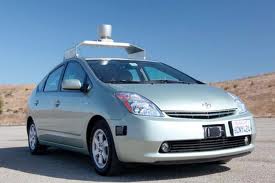
Google’s Driverless Car
Well, because when someone is hurtling down a highway with a computer making all the decisions there is no excuse not to think. It’s not as if you have to wonder where the next turn is or worry about swerving for skunks. This car takes care of everything. And if you are sitting there bored, then you haven’t thought this through. Cause if you did you’d realize what this means is that within a very, very short period of time most of us will be unemployed.
The last time something as significant as a driverless car came along was the turn of the 19th century when machines began to displace artisans. Luddites saw right away where this was going and without the aid of cell phones or the internet successfully staged nationwide protests. In fact, at one point there were more British soldiers fighting Luddites than there were soldiers fighting Napoleon in Europe. But, alas, it’s hard to hold back progress. Once some jerk comes up with a machine that can do your job … well, let’s just say it’s only a matter of time.
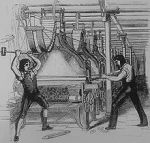
Luddites Breaking Frames, 1812
Now, don’t get me wrong, there are a lot of benefits to driverless cars. Our roads will be much safer. And, let’s be honest, who can argue with technology that can drive your aging mother to her doctor’s appointment. But the bigger question we need to ask is whether or not our educational system is ready to retrain the 450,000 people currently working within Canada’s transportation sector.
But, hold on, it gets worse.
Last year Peter Diamandis’ X Prize Foundation put $10 million on the table for the first entrepreneur to come up with a smartphone that is able to perform a medical diagnosis better than a team of doctors. Sound farfetched? It shouldn’t. This is the exact same challenge the American Defence Department made that led to the driverless car.
So what does all this mean?
Work, as we currently know it, is about to go through the most radical transformation since Luddites gathered to smash mechanized looms. If you have an outcomes based job – and I hate to tell you this but that means pretty everyone from medical doctors to truck drivers – then you are at risk of being replaced by a computer that can do it safer, faster, and more accurately.
Optimists are quick to point out we’ve been going through this sort of thing for over two centuries now. Some new gadget comes along. Workers get displaced. But, it’s not a big deal because the displacing technology always inspires new employment opportunities.
Yeah, well, not this time.
Why? Because up until now machines replaced brawn. And as they got better at it our response was to just move out of the way. The result is that over the last two centuries work, as we now define it, gradually came to be repositioned towards activities that require a human brain. In fact, as late as 2005, economists Frank Levy and Richard Murnane argued in their book The New Division of Labour that there was a defining relationship between humans and machines. Machines could help you load a truck, but they would never be able to drive it. I think we can all agree we’ve turned a corner on that one.
According to Moore’s Law computing power doubles every two years. That means in a little less than a year the computer driving Google’s car will have twice as much processing power as it does right now. And if in a year’s time we invent a smartphone that can tell me if I have tuberculosis, well, it too will march forward at the same pace. We, on the other hand, have capped out. I will never be a better driver than I am right now. And, as for my doctor, well, let’s just say I wouldn’t mind getting my hands on that phone.
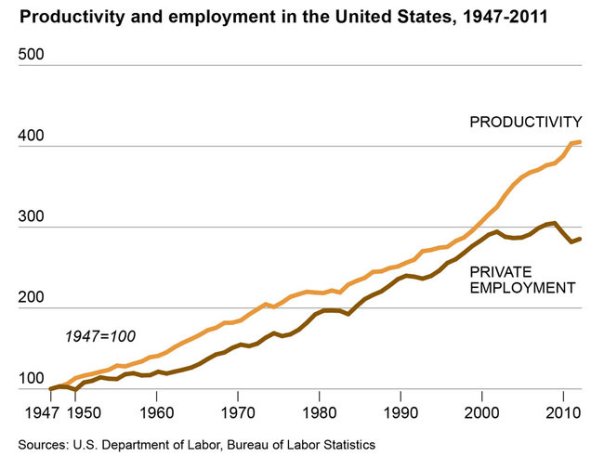
The Jaws of the Snake
We have entered a period that in the future will probably be referred to as the Great Decoupling. The American economist, Jared Bernstein, was the first person to notice the trend captured in the graph above. Over the last seventy years human productivity has grown in tandem with employment. But about ten years ago, when computers started getting faster, that relationship finally came undone. This graph is sometimes referred to as the jaws of the snake for it looks a bit like cobra springing after its prey.
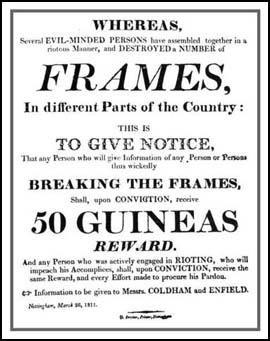
Luddites: Wanted Dead or Alive
It is important to remind ourselves that computers are not the problem. We could gather in groups and have iPad smashing parties, but it still won’t close the mouth of this snake that is about to bite us. If we are to survive – or better still, thrive – then we need to redefine work before computers make us redundant. This is an enormous task for we need to reposition our societal infrastructure towards that sweet spot where computers still can’t compete. The good news is that if you are an entrepreneur or a critical thinker, then this is your century! But if you are content being a drone with your head down in some corporation, the next knock on your door could be the HR Officer with a box for you to gather up your things.
So where do we even begin? Well, the first place we need to start is with our education sector. Right now the entire system from P-12 to College career training is outcomes based. This is a problem – a big, BIG problem! If we condition youth to set goals and work backwards, then we might as well paint a big red target on them because those jobs will soon be gone. Inquiry based learning, on the other hand, holds hope. Why? Because it rewards learners to be courageous, critical thinkers. The most important skills our emerging workforce will need is the ability to research opportunities and challenge conventional thinking.
The next thirty years has the potential to be one of the most disruptive periods we have known in centuries. Public debt is at an all-time high. Our population is aging and will consume social services such as health care at an unprecedented rate. And to top it all off our workforce is about to be dislodged by technology. Think what you will of Google’s driverless car, but one thing is certain: if we don’t change direction right now, then in the very near future we will all have a lot more time to surf the net.
READ: Economist Jared Bernstein’s Blog
LISTEN: Erik Brynjolfsson talks technology and the changing nature of work
READ: Erik Brynjolfsson and Andrew McAfee’s book, Race Against the Machine.
LISTEN: Peter Diamandis talks about technology and abundance.
LISTEN: Sebestain Thrun on how they created Google’s Driverless Car


Karl,
Wonderful writing and introspection. It seems that the interruption of “everydayness” is what leads us forward albeit to the consternation of many.
Once again, thanks for a great piece and the additional reading and listening links.
Well Done!
Kevin
This article reminds me of the super computer -Deep Thought # 42 on the Hitchhikers Guide to the Galaxy ! Perhaps we should view this vile viper -not with disdain-but with a sense of opportunity. We are reminded that technology cannot replace human interaction,listening well,spirituality,a kind word, intimacy,watching a sunset, solving world hunger, or enjoying the glee on our children’s faces . Are these events not exempt from the perils of technology?
I continue to engage, with others in therapy(-fortunate for me) and rely on critical thinking ; those involved challenge conventional thinking as they courageously face their vulnerabilities on the way to change.–so the bite is not deadly !
And indeed what an opportunity -in this time of technological turmoil-to question the essential value of life .Hope is key –Hope will be the antidote!
Tks Karl for a creative and thought provoking piece Anne
Hi there Karl,
Once again you have outdone yourself. Great work and research for those financial workings reference everyday reflextive responses to life. kmf