Karl Williams Turner

Archive for October, 2012|Monthly archive page

My Swim in the Alumni

In Doctoral Research on October 29, 2012 at 11:57 pm

The Law of Comparative Advantage is one of the only insights to come out of the social sciences that is both true and non-trivial.

Paul Samuelson, economist and Nobel laureate

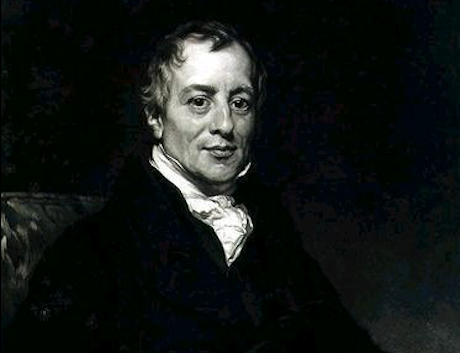
David Ricardo, British Political Economist, 1772-1823

When I was a student at Dalhousie University pursuing my undergraduate degree I would often head to the Dalplax between classes to squeeze in a swim.  For anyone who was there during the early 1990s, you may remember that the Alumni Office was lodged in a small brown house Read the rest of this entry »

A Pencil’s take on Emergence

In Doctoral Research, IDEAS: Standards - The Screw that Changed the World on October 16, 2012 at 10:15 pm

“I, Pencil, simple though I appear to be, merit your wonder and awe, a claim I shall attempt to prove.”

I, Pencil by Leonard E. Reed

While reading Chapter Two of Dave Elder-Vass’ book, The Causal Power of Social Structures: Emergence, Structure and Agency, I found myself thinking of an essay I came across several years ago by Leonard Reed.  The reason for this is that in the section ‘Morphogenesis and morphostasis,’ Elder-Vass uses a pen to demonstrate the difference between the two concepts.  Morphogenesis is defined as a process or Read the rest of this entry »

Standards and the Classroom:

In Doctoral Research, IDEAS: Standards - The Screw that Changed the World on October 4, 2012 at 10:46 pm

Reflecting on Michael Apple’s Educating the ‘Right’ Way and William Pinar’s What is Curriculum Theory?

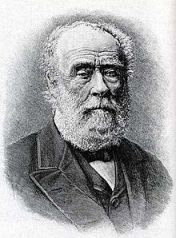
Sir Joseph Whitworth: Creator of the World’s First Industrial Standard

Both Michael Apple and William Pinar’s books focus on issues currently facing the American education system.  Our professor, Donovan Plumb, acknowledged as much at the beginning of our first class, commenting that it is important Read the rest of this entry »

About

In Menu on October 2, 2012 at 11:49 pm

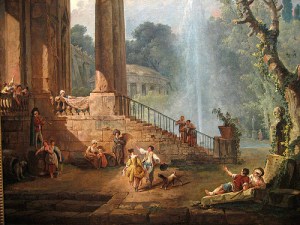
In Ancient Greece a portico was the roofed section at the front of a public building.  It provided shelter from the sun and rain, but was also cool and airy seeing that it was usually Open on three sides.  As a result these spaces became popular meeting spots for students and academics.

The Portico of a Country Mansion by Hubert Robert 1773

Read the rest of this entry »

The Proust Questionnaire

In Menu on October 2, 2012 at 11:29 pm

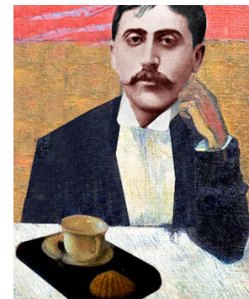
In England, towards the end of the 19th century, a popular practice was for people to pose a series of questions that revealed a snapshot of the interview subject’s personality.  Marcel Proust, the French novelist, took the test twice and is often wrongly credited with having invented it.

Marcel Proust

Read the rest of this entry »

Silos and Stovepipes: Research always Starts with a Question

In Master's Research on October 1, 2012 at 11:39 pm

All journeys begin with a question and the one that inspired my master’s thesis – why go to university – appeared easy enough to answer.  We go to university to get an education so that we can get a good job, to maybe study something we feel passionate about or learn to be a critical thinker.  When you think about it there are lots of answers to this question, but thankfully none of them satisfied the high school students who I began my career in higher education attempting to recruit.

Read the rest of this entry »

Biography

In Menu on October 1, 2012 at 10:18 pm

Karl Turner was born in Northern New Brunswick. He lived in Acadian communities until he was approximately five years of age, at which point his family moved to Nova Scotia.  They lived in a number of small towns on the Northumberland shore before finally settling in Dartmouth.  During this period Karl learned to play the bagpipes and competed in both individual and band competitions across North America.  He capped off his competitive career as Pipe Major of Dartmouth Pipes & Drums, one of the oldest and most successful piping associations in Atlantic Canada.

Upon graduating from high school he was accepted into Canada World Youth (CWY), an international development exchange program, and spent four months living and working on a farm in rural Saskatchewan before moving to a remote village in the foothills of Nepal.  The experience with CWY proved to be the metre against which he has come to measure most of his life experiences.  In fact, while pursuing his Bachelor of Arts degree at Dalhousie, from which he graduated with combined honours in Philosophy and International Development Studies, he worked and volunteered in the Atlantic CWY Office, assisting with the administration of a variety of international exchanges including Jamaica, Pakistan, Egypt and Costa Rica.

Upon graduating from Dalhousie Karl was accepted into the English Language Monitor program.  He moved to Northern Quebec where taught part-time at the CEGEP du Jonquière while studying language and culture full-time at the Université du Québec à Chicoutimi (UQAC). The following year he secured a year-long teaching contract at the Polyvalente on Les Îles-de-la-Madeleine, QC, and was there during the second referendum, an experience he is currently attempting to turn into a book.

For the last fifteen years Karl has held a variety of administrative positions within Atlantic Canada’s higher education sector. Early on in his administrative career, though, he decided to pursue academic research in his spare time.  One manifestation of this has been his documentary work for IDEAS on CBC Radio.  But his more formal research began when he was accepted into the Master of Arts programme in Atlantic Canada Studies at Saint Mary’s University.  While there his mentor was historian John Reid, a Fellow with the Royal Society of Canada.  Karl’s thesis, Silos & Stovepipes, looked at the rationalization negotiations that took place between the provincial government and its universities during the 1990s, an event that nearly led to the amalgamation of several universities. With the encouragement of his academic mentors he is currently pursuing his Doctoral degree at Mount Saint Vincent University under the supervision of Robert Bérard and Jeff MacLeod.

Karl remains committed to promotion and preservation of Acadian Education.  He currently sits on the board of Le Petit Voilier, a French language early childhood centre that also happens to be the third largest francophone institution in the province.  Also, he was recently appointed to the Comité d’école consultative (School Advisory Board) at Bois Joli, the elementary school where his two daughters attend.

Is this your new site? Log in to activate admin features and dismiss this message
Log In