“I, Pencil, simple though I appear to be, merit your wonder and awe, a claim I shall attempt to prove.”
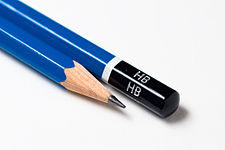
I, Pencil by Leonard E. Reed
While reading Chapter Two of Dave Elder-Vass’ book, The Causal Power of Social Structures: Emergence, Structure and Agency, I found myself thinking of an essay I came across several years ago by Leonard Reed. The reason for this is that in the section ‘Morphogenesis and morphostasis,’ Elder-Vass uses a pen to demonstrate the difference between the two concepts. Morphogenesis is defined as a process or processes that “elaborate or change a system’s given form, structure or state (Elder-Vass, p. 34).” For example, if we throw a pen into a fire, parts of it would vaporize while others would congeal. Morphostasis, on the other hand, is defined as the processes that “tend to preserve or maintain a system’s given form, organization, or state (Elder-Vass: 34).”
The reason I found myself thinking of Reed’s paper was because it was written from the perspective of a pencil. It appears as if Elder-Vass and Reed are both atking on the concept of emergence in slightly different ways.
So what exactly is emergence?
Well, for Elder-Vass an entity has emergence if it has “a causal impact that is not just the sum of the impacts its parts would have if they were not organized into this kind of whole (Elder-Vass: 5).” So, in a way, a pen is designed to have an emergent property: It puts ink onto a page in a clean, effective and constant manner. (And as long as the earth doesn’t veer too close to the sun morphostasis will keep it that way.) What Reed does in his essay, “I, Pencil” is force us to think for a moment about how these emergent properties came to be. And his – or rather, the pencil’s – conclusion is that no one person in the world knows how to make this emergent property occur.
___________________________________________________________________
“Simple? Yet, not a single person on the face of this earth knows how to make me.”
I, Pencil
Leonard E. Reed
____________________________________________________________________
What Reed is trying to do with his essay is to get us to stop for a moment and take a sober second look at a simple object, an object that upon closer inspection is miraculous. As far as human tools go, a pencil is about as simple as it gets. But if we were to task a single human being with creating one from scratch, they would be at a complete loss. They wouldn’t have the tools to mine the iron ore needed to make the metal band at the top. Nor would they be able to find – or for that matter vulcanize – the rubber eraser encased in this band. And then there is the graphite they would need to locate, the wood to cut and the lacquer to mix. Creating a single pencil from scratch could very well be a person’s life work. When viewed through this lens the material world we have constructed is quite astounding for we are literally surrounded by objects that no one person knows how to make.
In my own odd way I realize now I have been thinking about emergence for quite some time without actually thinking about it along those terms. In an earlier entry on this website I talked about a documentary I did for the CBC on Standards. What I would argue – and I think Elder-Vass and Reed would concur – is that emergence, whether biological, social or industrial, needs an Archimedean point upon which to stand. And that point almost always boils down to a standard.
As Elder-Vass points out early on in the section on morphogenesis “for a string of DNA to exist, it must be composed only of certain sorts of molecules, arranged in a certain characteristic pattern (Elder-Vass: 33).” With this in mind it is important to point out that our world is as rich with biodiversity as it is poor in genetic diversity. With the exception of a few ciliates that thrive near volcanoes at the bottom of our oceans, Mother Nature has used this basic (and in some ways flawed) building block to construct every living thing we see around us.
In a way screws are the DNA of our industrial world. Without them the trade and production complex we now depend upon would simply sputter to a stop. Everything from iPods to pencils is dependent upon them ‘being arranged in a certain characteristic pattern.’
Early on in his book Elder-Vass points out that the ‘disagreements over the role of social structure are nothing less than a battle for the heart and soul of sociology”. He goes on to say that the same issues arise in “any discipline that seeks to examine what happens in the social world (Elder-Vass: 3).” I am not a sociologist, but this book has proven to be an interesting entry point into the epistemological struggle over how and why screws and DNA matter.


Well, Karl Williams Turner, your potential and power are showing! Given the clever chap that you are it is no surprise that you came up with something like a pencil as a property, whose higher levels include manufacturing (for one), and whose lower levels may include the potential for human creativity.
Moreover, Matt Ridley’s clarifying and humorous interpretations of the laminar were exquisite! And what better way is there to describe sexy than making the reference to words–or better still–ideas. Surely, conceiving ideas must be the sexiest emergent for human beings!
Your unique response, expounding and exemplifying Elder-Vass’ critical realist approach, has inspired me to be more adventurous in my responses!
So thank you,
Anne
Hi there
Thought this was very significant and your approach covered most of the bases. I would ask you to consider this about the pencil. Each pencil is created as you stated with numerous ingredients. Let’s say we use the lead as a noun which means that you are developing and emergent idea which would produce many entities . some you like and some you may not. The great LEAD er that you are would utilize the lead in your pencil to develop the additional skills required to move your theory forward and should they not foster the reductionist proposal of your expectation turn the pencil around use the eraser and take the lead again as you build the poststructuralist methodology to support your ideals. Lead in the pencil amen. kmf Great job by the way i just could not resist. kmf