Reflecting on Michael Apple’s Educating the ‘Right’ Way and William Pinar’s What is Curriculum Theory?
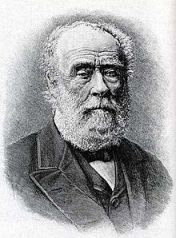
Sir Joseph Whitworth: Creator of the World’s First Industrial Standard
Both Michael Apple and William Pinar’s books focus on issues currently facing the American education system. Our professor, Donovan Plumb, acknowledged as much at the beginning of our first class, commenting that it is important to follow American educational trends seeing that they usually end up being adopted within Canada after a few years. Indeed, one student in our class commented that the policy path is almost always the same: Texas, Alberta, followed by Ontario before fanning out into the periphery.
What is Curriculum Theory?
For this reflection I’d like to pick-up on one of the discussions that flowed from these observations. Both Apple and Pinar do an excellent job of explaining how and why standardized testing has taken hold of the American system of education. Neither are fans of the American government’s No Child Left Behind (NCLB) policy. And from the discussion in our class it doesn’t sound as if my classmates are keen to see standardized testing expanded any further in Nova Scotia. But for me, of all the interesting things discussed in Apple and Pinar’s books, standardized testing was … well, their points aren’t wrong. Rather I think they need to be placed within a wider (and longer) context.
Educating the ‘Right’ Way
Standardization is something that consumed a good seven years of my life. I first became interested in it about eight years ago when I was elected to chair a regional committee that was attempting to create a system that could move student transcripts, be it P-12, college, and/or university, electronically. Doing it this way is not only more secure, but it saves a tremendous amount of time and money. Leading this initiative was one of the most exciting experiences of my administrative career for the whole thing took off like a grass fire. Pretty much everyone jumped onboard and we very quickly got the attention of a lot people across North America. (Sadly, the only thing we lacked was imagination at the senior executive level of our institutions.) But what was interesting about the whole experience was that when things were really ‘hot’ with this project I started to get calls out of the blue from people who wanted us to adopt their standard. It was my first glimpse at the politics behind standard setting.
Now, although the project failed, my interest in standards grew. A few years ago I did a radio documentary for IDEAS on CBC Radio One. It was a nice little piece that proved to be quite successful. As a result IDEAS encouraged me to do another one. When I pitched ‘Standards’ to them they were a little taken back. (A whole hour on standards? Yes, a whole hour!) Now, my first documentary was on the history of the bagpipes … and who would have thought that would be interesting. But it was and I suppose that gave me some traction. Maybe there was something more to standardization than met the eye. Well, they took a risk and I think it paid off for all of us.
So, where does this tie into what’s happening with education? Well, I encourage you to have a listen to the piece. Standardization is best described as a social movement that dominated the 20th century and shows no sign of letting up. Our world is now exploding with them. As a result, it should come as no surprise that standardization is reaching into our classrooms. Is it a good thing? Is it bad? Well, I say, when you consider how they frame almost every action of our lives, it is something profoundly understudied. And as educators we need to get our heads around how and why this is happening. Cause it is not going away.

Screw Making Machine, 1871
Standards: The Screw that Changed the World consumed a little over two years of my life. I read everything written on the topic and rustled every corner of the world only to come up with a handful of people who had something meaningful to say about it. Towards the end I thought I had the topic covered, but while in the studio doing an interview with Matt Ridley I was caught off guard. I was in Halifax and he was being piped in from Newcastle-upon-Tyne. We were nearing the end of our allotted time. Right before the BBC was set to close the line he asked if I would mind if he threw something at me that he had been thinking ever since we first started talking. I agreed. I turned off my microphone and leaned forward waiting to hear what he had to say.
“Life has a standard!”
He went on … eloquently, as always. But I sat there dumfounded. He was absolutely right. Standards aren’t just technical, or social … they run straight down into our DNA.
It seems we are hardwired to standardize.


Karl
I appreciate your progression, clarity, connections and most of all your thought provoking subliminal plot. Perhaps we are hardwired to standardize, yet, on the contrary it is our biological diversity that provides our species the best chance for survival. What is the potential end product of universal standardization? Then it appears this becomes an extension of the ongoing positivist, post-positivist debate?
Karl, thanks for your comments. Standards do structure our society in such a way that we can “progress”. I listened to some of your piece on standards (will listen to more later) and recognize the value that standards have on creating structure and organization in our society. I however, still do question the use of standards in education (testing, curriculum). The bottom line for me is that we continue to marginalize our underrepresented populations through the use of standards. Success in standardized testing is unfairly related to one’s cultural capital. I agree that standards can be beneficial, but our educational system needs to find other ways to identify what success looks like in our society. I always appreciate your comments Karl as you ask good questions and get me thinking.
Hi Carl:
Thanks so much for the link to the Ideas show. I haven’t had a listen yet, but am going to download it to my phone and give it a listen while I’m driving to the Valley later on today.
I think Elder-Vass may offer some interesting insight into the issue of standards. His contention is that, while some aspects of our lives can be beneficially supported by holding them still, others require a sense of openness. The elaborations of a jazz musician might be an example. Starting from a set of “standard” rifts, the musician experiments with her and her fellow musician’s power to improvise, to generate new and unexpected emergent sounds. I think Pinar’s idea about the complicated conversation is thought of in a similar way. So the problem really isn’t with standards, per se, it might be more with the over-generalization of standards to realms where they don’t really belong, or where, as Apple and Pinar suggest, they might actually do harm. Elder-Vass wouldn’t be against standards altogether. Rather he would argue that they are part of a flat way of thinking about the world that tries to imagine all things existing on the same plane with the same kinds of powers and potentials.
Donovan
Interesting stuff, Karl.
It seems to me that your reflection touts standardization from the perspective of normativity within an association of nations- as Elder Vass would say. If this is true then we can try to explain why the Neoliberals and Neocons are interested. For the former- it facilitates free market activity; while for the latter, it allows competition in an association where they hope their nation state can be at the top and consequently maintain power.
Joseph